Is Your AI Ad Image Costing You Clicks?
Artificial intelligence can make ad images for penny. New research shows when those savings pay off and why an artificial look can cost clicks.


Tepper School doctoral student Pim Assavabhokhin speaks with Professor Emily DeJeu about how AI can enhance short-term decision accuracy and transactive memory systems to improve team speed, but over-reliance on technology can create a dependency.

Pim Assavabhokhin is a third-year Ph.D. student in Organizational Behavior and Theory at the Tepper School of Business at Carnegie Mellon University. Working with Professor Linda Argote and Professor Catherine Shea, her research examines human AI teaming, focusing on how AI systems help teams maintain and coordinate knowledge when transactive memory systems, or the shared understanding of who knows what, are strong, as well as when they break down. She conducts both laboratory and field experiments to understand how AI can support learning, performance, and knowledge continuity in teams. In a related stream of research, Pim investigates how AI reshapes advice seeking and impression management at work, drawing on network theory to examine whether seeking advice from colleagues undermines perceptions of competence and whether AI can serve as a private alternative that preserves access to information without incurring reputational costs.
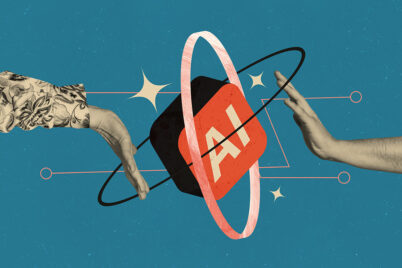
Artificial intelligence can make ad images for penny. New research shows when those savings pay off and why an artificial look can cost clicks.

It’s common to describe LLMs as tools, but Emily DeJeu argues that they are actually cognitive mediators that that can shape writing and critical thinking, pushing our modes of communication toward homogeneity.

Forecasts can improve decisions about inventory, capacity, advertising, and pricing. But when prediction quality is uncertain, the harder problem is knowing when to trust the forecast and when to fall back on a more robust plan.